adidas Adizero Adios Pro Evo 3: The Record-Breaking Supershoe
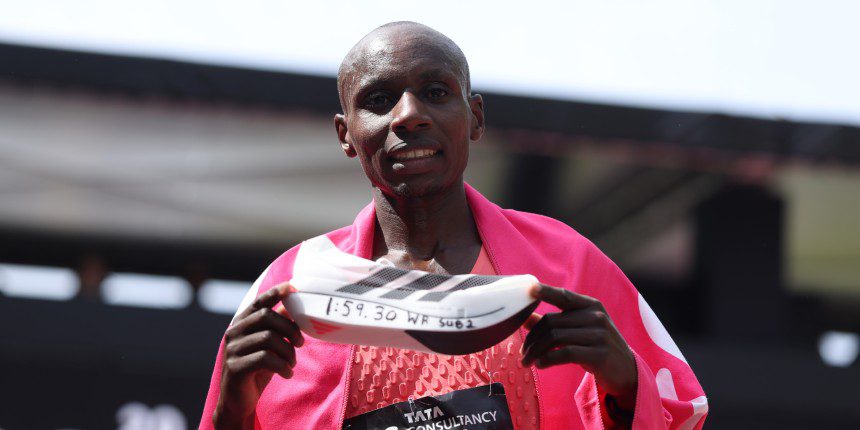
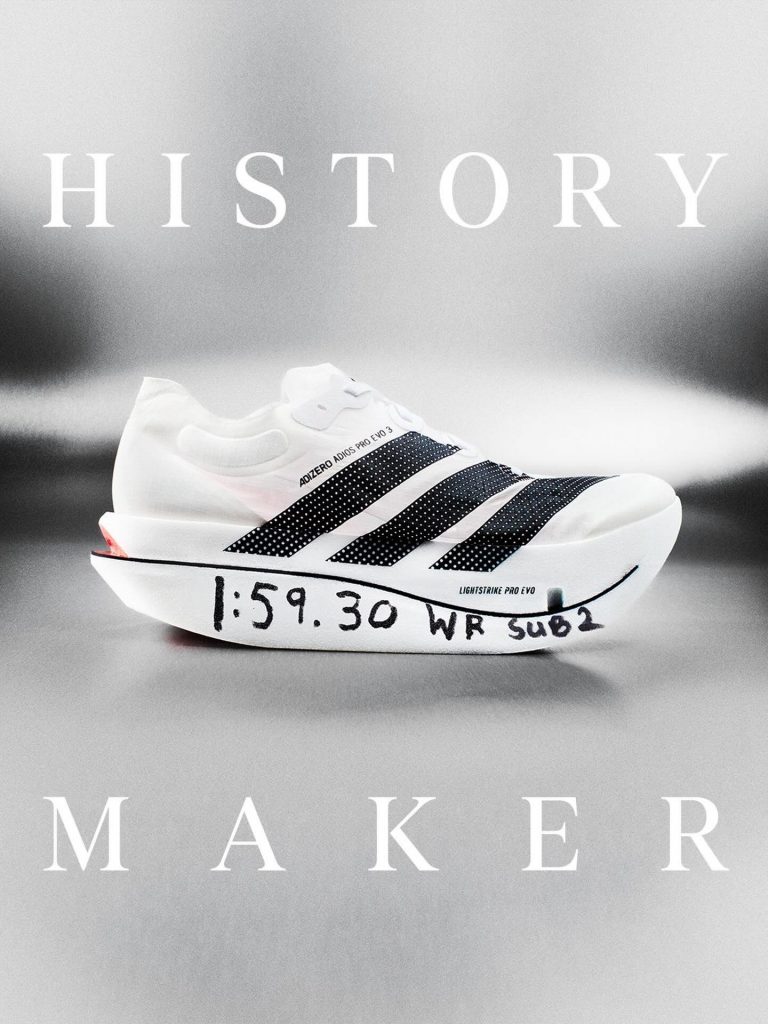
The TCS London Marathon 2026 has just gone down in history as one of the greatest athletics events. At the forefront of the highly anticipated race is Sabastian Sawe, who set a new marathon world record with a finishing time of 1:59:30. Joining Sawe in the glory is Tigst Assefa, who broke the women’s world record with a 2:15:41 finish, and Yomif Kejelcha, who became the second sub-2 marathoner in his impressive 42km debut. What did they have in common? One answer: they all wore the adidas Adizero Adios Pro Evo 3.
The latest marathon supershoe from adidas pushes further into territory that most brands still consider experimental. Weight remains the headline, dropping below 100 grams, but the real shift sits in how adidas is refining its super-shoe formula and chasing another one-off breakthrough. This isn’t a concept. It’s a continuation of a system built to extract marginal gains at the highest level.
Making Marathon History

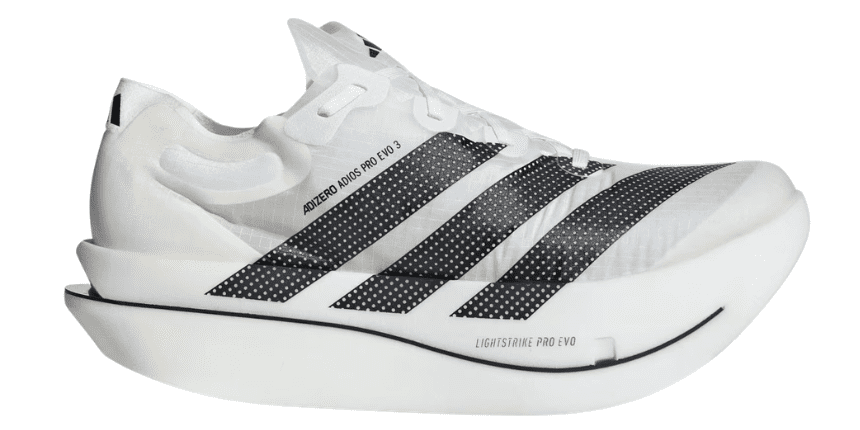
Sabastian Sawe made a statement in a shoe that barely feels built for 42 kilometres. The adidas Adizero Adios Pro Evo 3 strips the super-shoe formula down to something closer to a prototype than a retail model. Prioritising weight above all else, it’s lighter than anything else on the elite start line. And that significant absence of mass is the point rather than a side effect.
While most brands refine, adidas is pushing a more extreme idea: that the fastest shoe might also be the least practical. Sawe’s and Assefa’s wins give that theory weight, even if the shoe itself has almost none.


What’s in the Shoe?
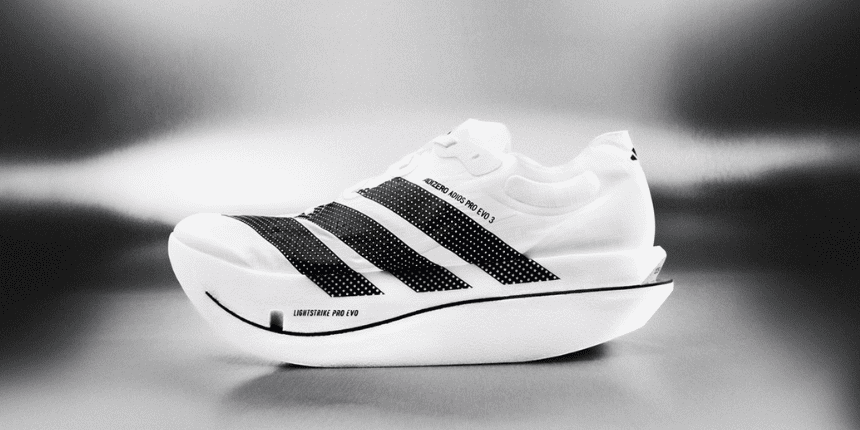
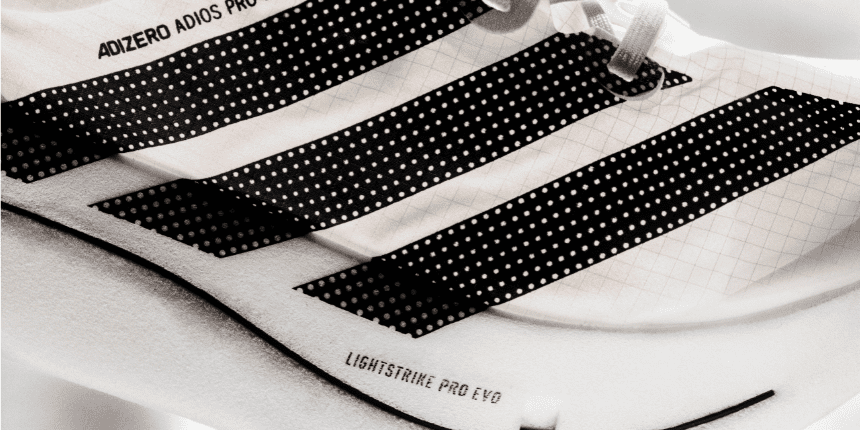
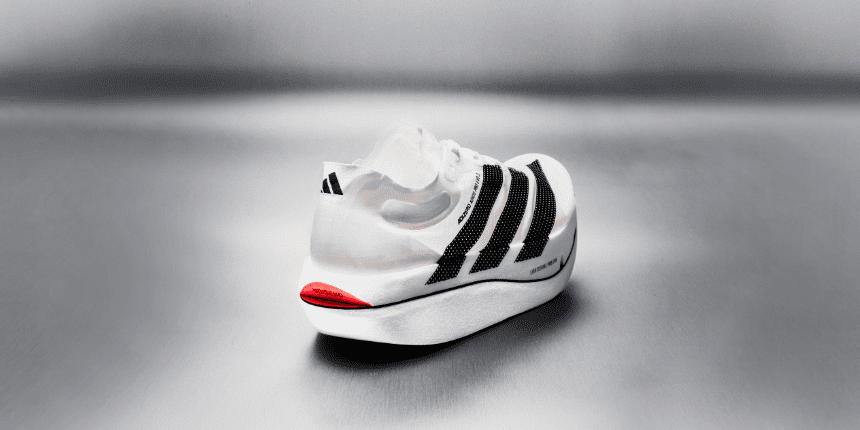
The focus moves beyond carbon plates alone. ENERGYRIM reshapes how foam and propulsion interact, while the next-gen Lightstrike Pro midsole has been reworked to weigh 50% less than the compound used on the Evo 2. The 39 mm heel and 36mm forefoot keep you high off the ground while meeting the standards allowed in professional competition.
The aggressive rocker remains, forcing a forward roll through each stride, but the platform now feels more stable late into a race, where earlier versions began to lose composure.
Durability and grip have also been addressed without adding unnecessary weight. A revised Continental™ rubber in the forefoot improves traction in less predictable conditions, closing a gap that previously limited the shoe to near-perfect race setups. It signals a move away from single-use thinking, even if this still sits firmly in elite territory.
What sets the Adizero Adios Pro Evo 3 apart isn’t just how little there is, but how deliberately it’s been stripped. The midsole is tuned for a single, explosive lifecycle, the upper borders on invisible, and the overall structure feels closer to engineered timing than footwear.
Who Should Wear the adidas Adizero Adios Pro Evo 3?
Like most supershoes, the Evo 3 suits a very specific profile. Elite or near-elite marathoners with efficient mechanics, high cadence, and the ability to hold form deep into the final 10K. Runners who can actually access the gains from an ultra-light, aggressively tuned platform. There’s no margin for inefficiency here; the shoe assumes precision and punishes anything less.
For everyone else, the appeal is largely theoretical. The Evo 3 isn’t built to carry a race; it amplifies what’s already there. Without the engine to match, its stripped-back construction becomes a liability rather than an advantage.
This isn’t trying to compete with everyday runners, and it doesn’t need to. It stays intentionally out of reach, both in price and purpose, reinforcing its position as a specialised tool rather than a crossover option. The Brand with the Three Stripes isn’t softening the category; it’s sharpening it, refining a shoe built exclusively for those already pushing the limits. If you’re interested in a pair, the adidas Adizero Adios Pro Evo 3 officially launches on April 30 for £450.
Where to Buy the adidas Adizero Adios Pro Evo 3 | KH7678